
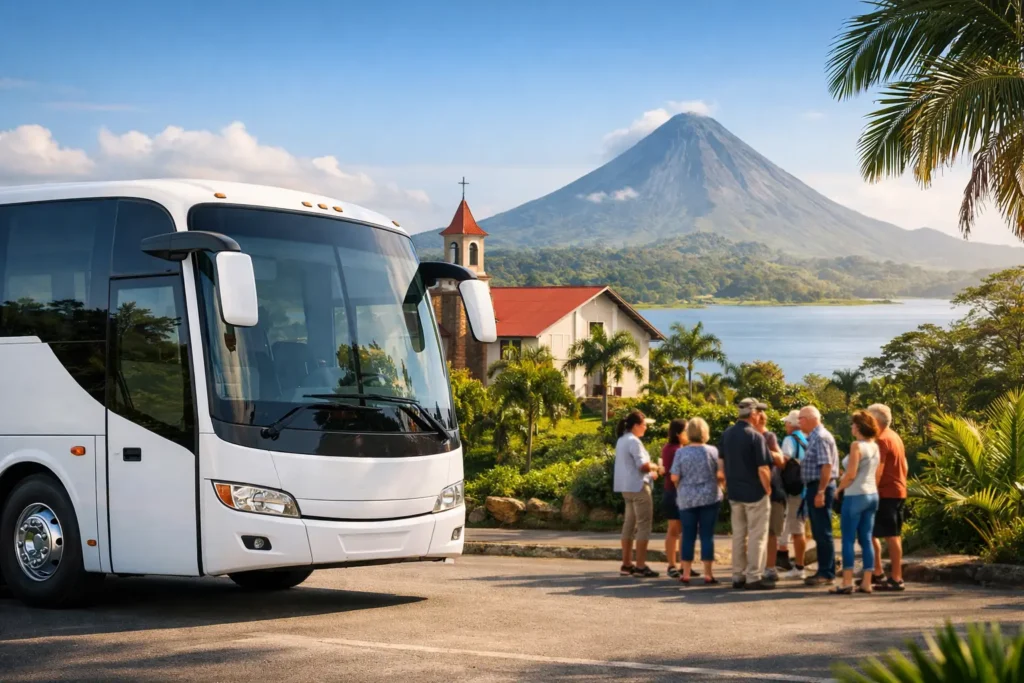
When a church group lands in Costa Rica, transportation shapes the trip faster than almost anything else. If the airport pickup is late, the bus is too small, or the route planning is off, the stress shows up immediately. That is why choosing the right transporte para grupos de iglesia Costa Rica is not just about getting from one town to another. It is about keeping the group safe, on schedule, comfortable, and focused on the purpose of the journey.
Church groups travel differently from typical vacation parties. You may be coordinating pastors, youth leaders, families, mission volunteers, musicians, or mixed-age travelers who all need different levels of support. Some groups carry extra luggage, donated supplies, instruments, or presentation materials. Others are arriving on different flights and heading straight to places like La Fortuna, Manuel Antonio, Jacó, Monteverde, Uvita, or the Osa Peninsula. In Costa Rica, those details matter because travel times can be longer than they look on a map, roads can be winding, and good planning makes a real difference.
What church groups need from transportation in Costa Rica
For church travel, reliability comes first. A private transportation provider should understand that your schedule may include airport arrivals, lodging check-ins, worship events, volunteer activities, sightseeing, and meals that need to stay coordinated. One delay can affect the entire day.
Safety is just as important. Groups visiting from the US often are not familiar with local driving conditions. Mountain roads, rain, narrow stretches, and changing traffic patterns can make self-driving a poor fit for many organizers. A professional local driver gives the group something valuable right away – peace of mind.
Comfort also matters more than many people expect. A church group may spend several hours on the road between destinations, especially if the itinerary includes multiple regions. Clean, air-conditioned vehicles, enough luggage space, and room for passengers to ride without feeling cramped help people arrive rested rather than worn out.
Then there is communication. Group leaders need clear pickup instructions, direct answers, and confidence that someone is tracking the details. English-speaking support is especially helpful when plans shift, flights change, or a stop needs to be added.
Why private transporte para grupos de iglesia Costa Rica works better
Private transportation is usually the best fit for church groups because it gives organizers control. Shared shuttles can be less expensive on paper, but they often create trade-offs that become frustrating for larger parties. You may deal with multiple stops, limited flexibility, luggage restrictions, and schedules that do not match your group’s needs.
With private service, the transportation is built around your itinerary. That means your group can be picked up at the airport, hotel, retreat center, or church location at the time that makes sense for you. If you need a grocery stop, a restroom break, or a lunch stop on a long route, that can often be arranged in advance.
This is especially useful for church teams that are balancing ministry or community service work with time to experience Costa Rica. The transportation should support the mission of the trip, not compete with it.
The planning details that matter most
The biggest transportation mistakes usually happen before anyone gets on the road. Vehicle size is one of the most common issues. Organizers sometimes estimate based on passenger count alone and forget about luggage, gear, and carry-ons. A group of 12 with full-size suitcases and supplies may need more space than expected.
Arrival logistics matter too. If part of the team lands in San José and another part arrives in Liberia, the plan needs to reflect that clearly. The same goes for groups staying in more than one destination. A route from San José to Arenal and then down to Manuel Antonio or Uvita requires careful timing, especially if there are activities scheduled on arrival day.
It also helps to know your group’s rhythm. Youth groups may need more frequent rest stops. Senior travelers may want easier boarding and a more relaxed pace. Mixed groups often do best when the transportation plan leaves a little breathing room rather than trying to pack every hour too tightly.
Airport transfers for church groups
For many visitors, the airport pickup sets the tone. After a long international travel day, no one wants confusion at arrivals. A well-organized airport transfer should include clear meeting instructions, enough vehicle capacity, and a driver who is prepared for flight timing and baggage delays.
Church groups often appreciate having one point of contact who understands the entire reservation, not just a single leg of the trip. That becomes especially helpful when travelers are tired, younger participants are traveling with leaders, or the group is managing several pieces of luggage per person.
If your itinerary begins with a longer drive, such as from San José to La Fortuna or from Liberia to a beach destination in Guanacaste, it is worth planning for comfort from the start. Cold air conditioning, a clean interior, and a professional welcome make a big difference after a travel day.
Multi-destination church travel needs local expertise
Costa Rica is compact compared with the US, but travel times can still surprise visitors. Distances that appear short can take much longer due to terrain and road conditions. That is one reason local route knowledge is so valuable.
An experienced transportation team can help organizers avoid common timing mistakes. For example, combining too many destinations in a short trip may leave the group spending more time in transit than expected. In some cases, it is smarter to stay longer in two locations rather than rush through four. In others, an early departure or a scenic stop can improve the day and reduce fatigue.
That local perspective is often what separates basic transportation from a genuinely well-managed group experience. A driver who knows where traffic builds, when weather tends to affect a route, and where to stop for a clean break adds real value to the trip.
What to ask before booking
Not every transportation provider is set up for church groups. Before booking, it helps to ask practical questions. Confirm the vehicle type and seating capacity, but also ask about luggage limits. Verify whether the service is private, whether the driver speaks English, and how airport pickups are handled.
You should also ask how schedule changes are managed. Church travel can be fluid. Flights move, event times shift, and groups sometimes need last-minute adjustments. A provider that communicates clearly and responds quickly is worth more than a low quote that leaves too much uncertainty.
Another smart question is whether the company has experience with coordinated group travel across destinations. Moving a couple from an airport to a resort is one thing. Managing a church group with multiple stops, varied ages, and a structured itinerary takes a different level of attention.
Comfort, hospitality, and trust on the road
The best transportation experiences are not only punctual. They feel cared for. That matters for church groups because the road time is part of the group experience. People talk, rest, prepare for the next activity, and begin forming their impression of Costa Rica from the window of the vehicle.
A professional driver with a calm presence can make that time smoother for everyone. Helpful suggestions, courteous service, and confidence behind the wheel reduce anxiety for group leaders who are carrying a lot of responsibility. For many visitors, that personal touch matters just as much as the vehicle itself.
This is where a company like CR Transfer fits naturally for organized church travel. Private service, clean vehicles, dependable scheduling, and local knowledge help group leaders stay focused on their people instead of worrying about road logistics.
Choosing transportation that supports the purpose of the trip
Church groups usually come to Costa Rica for more than sightseeing alone. Even when the itinerary includes beaches, volcano areas, or rainforest experiences, there is often a larger purpose behind the travel – fellowship, service, worship, outreach, or simply meaningful time together.
Your transportation should support that purpose with steady planning, professional service, and the flexibility to handle real-world travel conditions. The cheapest option is not always the best option, and the most expensive one is not automatically the right fit either. What matters is whether the service understands group needs, communicates well, and delivers a safe, comfortable experience from arrival to departure.
A well-run trip feels calmer because the details are handled before they become problems. When transportation is in good hands, leaders can focus on people, travelers can enjoy the journey, and the time in Costa Rica starts the way it should – with confidence.