
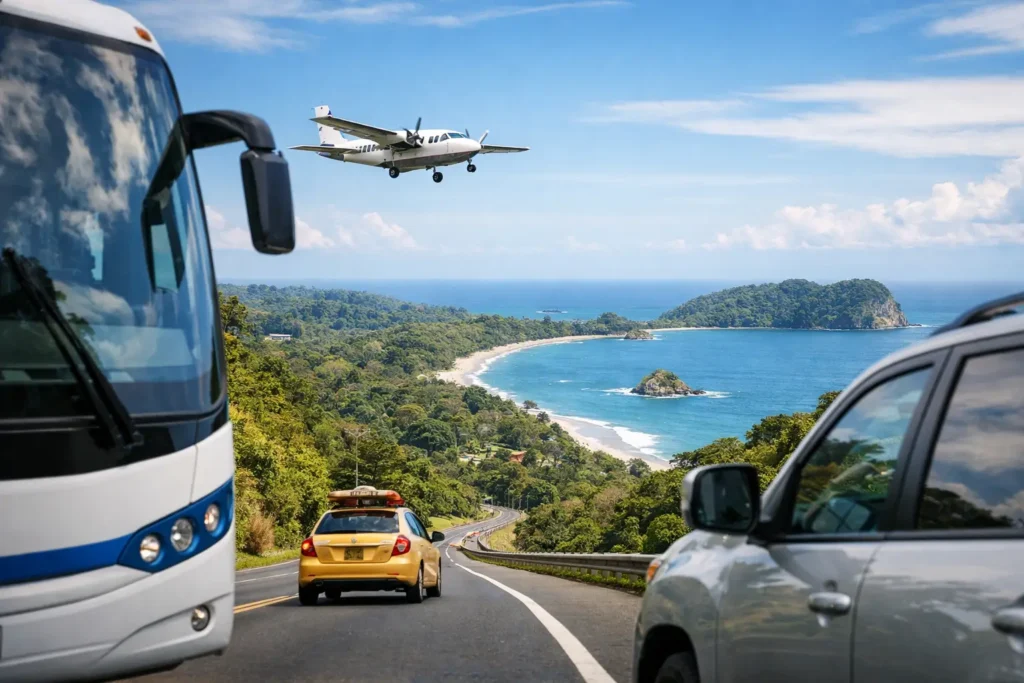
A beach vacation can feel less relaxing when the first question is how to reach Manuel Antonio from San Jose after a long flight. The good news is that this is one of Costa Rica’s most traveled routes, with several workable options. The better question is which option fits your arrival time, group size, luggage, and appetite for driving on unfamiliar roads.
Manuel Antonio sits on Costa Rica’s central Pacific coast, beside Quepos and roughly 105 miles from San Jose’s Juan Santamaria International Airport (SJO). Most travelers should plan on about 3 to 4.5 hours by road. The distance is manageable, but traffic leaving the Central Valley, weather, roadwork, and weekend beach traffic can all affect the journey.
For visitors who want to arrive calm, comfortable, and ready to enjoy the coast, a private transfer is usually the easiest choice. A rental car offers flexibility, while the public bus and domestic flight can make sense in more specific circumstances.
How to Reach Manuel Antonio From San Jose by Private Transfer
A private shuttle gives you door-to-door transportation from SJO, a San Jose hotel, or another pickup point directly to your Manuel Antonio or Quepos hotel. Your driver meets you at the agreed location, assists with luggage, and handles the route, tolls, traffic, and parking decisions along the way.
This option is especially useful after an international arrival. Although SJO is commonly called San Jose Airport, it is located in Alajuela, west of downtown San Jose. A professional driver can meet you after customs and start the trip without requiring you to find a rental-car office, navigate airport traffic, or coordinate a separate taxi to a bus terminal.
The route generally follows Route 27 toward the Pacific coast, then Route 34 south through towns such as Jacó, Herradura, Parrita, and Quepos. It is a scenic drive, with changing views of mountains, tropical countryside, and glimpses of the ocean. A private driver can make a practical stop for restrooms, coffee, lunch, or a photo when time allows.
For couples, families, and small groups, the value is not only comfort. It is the confidence of having a dedicated vehicle, air conditioning, room for luggage, and a local driver who understands Costa Rican road conditions. For larger parties, private transportation also keeps everyone together rather than dividing the group among several rental cars or public bus seats.
CR Transfer provides this type of personalized service with professional drivers who can help make the ride part of the vacation rather than simply the time between destinations. For families traveling with children, travelers with several suitcases, or groups arriving at different times, confirming vehicle size and pickup details in advance makes a meaningful difference.
When a private shuttle is the best fit
Choose a private transfer if you are arriving at SJO, traveling with children or older family members, carrying surfboards or substantial luggage, or simply prefer not to drive. It is also a strong option for church groups and private parties that need dependable timing and one clear point of contact.
The trade-off is cost. A private vehicle will cost more than public transportation, particularly for one or two travelers. But when the fare is shared among four to six people, and when you account for rental fees, insurance, fuel, tolls, parking, and the time required to pick up a car, it can be a very practical choice.
Driving From San Jose to Manuel Antonio
Renting a car gives you freedom to stop when you want and explore beyond Manuel Antonio. If your itinerary includes beaches near Dominical, Nauyaca Waterfall, Jacó, or other stops along the Pacific, having your own vehicle can be worthwhile.
The drive is generally straightforward by Costa Rican standards, and a standard two-wheel-drive vehicle is usually sufficient for the main route and most established hotels in Manuel Antonio. Still, do not judge the trip by mileage alone. Traffic can be heavy around the greater San Jose area and near beach towns on Fridays, Sundays, holidays, and long weekends. Rain can reduce visibility quickly during the green season, typically from May through November.
Route 27 is a toll road, so keep Costa Rican colones or a card accepted at toll booths available. Follow the rental company’s guidance on toll payment, fuel, and insurance before leaving the airport. Mobile navigation is helpful, but download offline maps as a backup because signal can be inconsistent in some stretches.
Parking deserves attention once you arrive. Manuel Antonio’s hills, narrow roads, and busy beaches can make parking more limited than first-time visitors expect. Many hotels have parking, but it is wise to confirm this before booking. At Manuel Antonio National Park, use official or clearly designated parking options and be cautious of unofficial attendants offering confusing directions on busy days.
A few driving realities to plan for
Avoid planning a tight schedule around your arrival. If your international flight lands in the afternoon, you may reach Manuel Antonio after dark, especially if immigration lines are long. Night driving is possible, but it is less comfortable for visitors unfamiliar with local roads, limited shoulder space, tropical rain, and changing road conditions.
If you do drive, take breaks when needed, keep valuables out of sight, and avoid leaving bags in an unattended vehicle. Costa Rica is welcoming and well traveled, but standard travel awareness still matters at beaches, parking lots, and roadside stops.
Taking the Bus to Manuel Antonio From San Jose
The public bus is the most budget-friendly way to travel from San Jose to Manuel Antonio. Direct buses generally depart from the Tracopa terminal in San Jose and travel to Quepos, the town next to Manuel Antonio. From Quepos, local buses and taxis continue up to the Manuel Antonio area.
Expect the full trip to take approximately 4 to 5 hours, depending on service type and traffic. Express service can be faster, while routes with more stops take longer. Bus schedules and departure points can change, so confirm current times directly before your travel day rather than relying on an old online schedule.
This option works best for independent travelers with light luggage, flexible schedules, and a comfort level with navigating terminals. It can be less appealing after a long international flight, particularly if you land later in the day or are traveling with young children. You will need to get from the airport to the terminal first, manage your bags, and possibly wait for the next departure.
The bus route itself is a legitimate, popular way to travel, but it is not a private airport service. If the goal is a low-cost adventure and you have time to spare, it can be a good fit. If your priority is an easy first day in Costa Rica, a direct private ride is usually the more comfortable choice.
Flying From San Jose to Quepos
A domestic flight from the San Jose area to Quepos Airport is the fastest option in the air. Flight time is often around 25 minutes, and Quepos is only a short drive from Manuel Antonio hotels. For travelers with limited vacation time, the aerial views of the Pacific coast can be a memorable bonus.
Still, flying does not always save as much time as it appears. You need to arrive early for check-in, meet baggage limits, collect your bags, and arrange transportation on both ends. Domestic flights can also be affected by weather, operational changes, and luggage restrictions. This matters for travelers bringing large suitcases, camera gear, diving equipment, or surfboards.
Flying is most useful when road travel is not appealing, when your schedule is tight, or when you are connecting to another destination. For a family or group, compare the total price of flights and airport transfers against a private road transfer before deciding. The road journey may be more economical and more convenient for everyone traveling together.
Choosing the Right Arrival Plan
Your best transportation choice depends on what you want your first day to feel like. A private shuttle is the simplest option for a smooth airport-to-hotel experience. A rental car is ideal for travelers who want independence throughout their trip. The bus keeps costs low, while a domestic flight minimizes time in transit but requires more coordination.
One practical detail is timing: if your flight reaches SJO late in the afternoon or evening, consider spending the first night near the airport and leaving for Manuel Antonio the next morning. You will avoid starting a multi-hour drive tired, and you can enjoy the coastal route in daylight. On the other hand, an earlier arrival can make a same-day private transfer very comfortable.
The road to Manuel Antonio is not simply a line on a map. It is the moment Costa Rica begins to shift from airport arrival to palms, warm air, and the Pacific waiting ahead. Choose the ride that lets you enjoy that change of pace instead of worrying about how to manage it.