
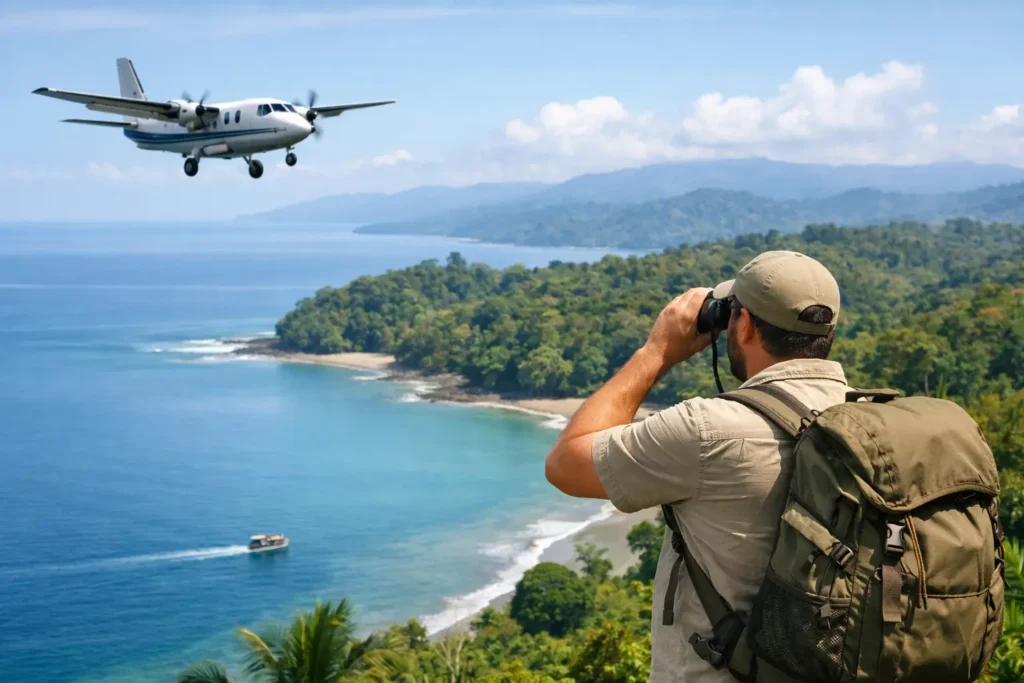
You usually know the Osa Peninsula is worth it the moment you start planning it – and then the logistics hit. Flights, river crossings, long highway stretches, weather, baggage, kids, group timing. If you are searching for como llegar a Osa Peninsula, what you really want is the clearest, safest, least stressful way to arrive and start enjoying Costa Rica.
The Osa Peninsula is one of the most remote and rewarding regions in the country. That is exactly why transportation matters here more than it does for places with simple highway access. Depending on where you are staying – Puerto Jiménez, Drake Bay, Cabo Matapalo, or a remote eco-lodge – the best route can look very different.
Como llegar a Osa Peninsula: the main options
For most travelers, there are three realistic ways to reach the peninsula. You can drive or take a private ground transfer from San José or another destination, you can combine road travel with a boat from Sierpe to Drake Bay, or you can take a domestic flight to Puerto Jiménez or Drake Bay. The best choice depends on your budget, your time, your comfort level with Costa Rican roads, and the exact lodge or town where you will stay.
If your priority is comfort and predictability, private ground transportation is usually the easiest option. If your priority is saving time, a domestic flight may make more sense. If you are staying in Drake Bay, the boat route can be part of the experience, but it requires a little more planning.
Driving to Osa Peninsula from San José
From San José, the overland trip to the Osa region is long but very scenic. Most routes follow the Costanera Sur along the Pacific side before turning south toward Puerto Jiménez, Sierpe, or other access points. Travel time often ranges from 6 to 8 hours, and that estimate can stretch depending on traffic leaving the Central Valley, road conditions, weather, and the number of stops you make.
For travelers used to US highways, this is where expectations matter. Roads in Costa Rica can be narrow, winding, and slower than the map suggests. A route that looks manageable on your phone can feel tiring after several hours, especially if you land the same day and are already dealing with customs, luggage, and fatigue.
That is why many visitors choose a private transfer instead of self-driving. You do not need to worry about navigation, local driving habits, or timing fuel and food stops in unfamiliar areas. You can also enjoy the ride instead of treating it like a task. For families, couples, and small groups carrying beach bags, camera gear, or extra luggage, that comfort becomes a real advantage.
Getting to Drake Bay through Sierpe
If you are staying in Drake Bay, one common route is to travel by road to Sierpe and then continue by boat. This is a popular approach because Drake Bay has more limited road access, and the boat ride is often the most practical final leg.
From San José to Sierpe, you are still looking at a long drive, generally around 5 to 6 hours under normal conditions. Once in Sierpe, travelers usually board a boat that goes through the mangroves and out toward Drake Bay. The boat trip is memorable and beautiful, but it is not the right fit for every traveler.
If you are carrying a lot of luggage, traveling with very young children, or arriving in heavy rain season, the boat transfer may feel less simple than it sounds. There are also timing issues. If your international flight arrives late, you may not comfortably connect with the last boat departure. In those cases, an overnight stay en route or a different arrival strategy may be smarter.
Flying to Osa Peninsula
The fastest way to reach the area is usually a domestic flight from San José. Flights operate to Puerto Jiménez and, depending on schedules and conditions, to Drake Bay. This can cut travel time dramatically and works well for travelers with short itineraries or anyone who prefers to avoid a full-day road transfer.
Still, flying is not always the easiest door-to-door option. Domestic carriers have baggage restrictions, and that matters if you are bringing large suitcases, sports gear, camera equipment, or supplies for an extended stay. Weather can also affect schedules more noticeably in remote destinations.
For some travelers, the most comfortable setup is a combination: domestic flight into the region, then a prearranged private vehicle or boat to the lodge. That keeps the day efficient without leaving the last segment to chance.
Which airport should you use?
Most international visitors arrive at Juan Santamaría International Airport in San José. From there, you can continue by private shuttle, domestic flight, rental car, or a mix of those options. If you are arriving in Liberia, reaching the Osa Peninsula is possible, but it is a much longer overland trip and usually not the most convenient route unless your trip includes stops in Guanacaste, Monteverde, or the central Pacific first.
If Osa is your main destination, San José is almost always the simpler gateway. It gives you more flexible onward connections and usually a smoother first day.
Private transfer vs rental car
This is the decision many travelers spend the most time on. A rental car gives you flexibility, and for some independent travelers that matters. If you plan to stop in several towns at your own pace and are comfortable with long-distance driving in Costa Rica, it can work well.
But there are trade-offs. The route is long, signage can be inconsistent, and road conditions can change with weather or local construction. Add airport pickup, insurance questions, and the fatigue of a travel day, and the savings may not feel as meaningful.
A private transfer is different. You are picked up on time, your bags are handled, and your route is managed by someone who knows where delays happen and where a worthwhile stop makes sense. For many US travelers, especially first-time visitors, that peace of mind is worth more than the freedom of self-driving.
For groups, it becomes even more practical. Coordinating multiple rental cars, separate arrivals, and different comfort levels behind the wheel can get messy fast. One professionally managed vehicle keeps the day organized.
What to expect on the route
The trip south is part of the Costa Rica experience. You will pass coastal stretches, palm plantations, mountain views, small towns, and river crossings depending on your route. A good transfer day is not about rushing. It is about making a long journey feel comfortable, safe, and well paced.
That said, travel times in Costa Rica should always be treated as estimates, not guarantees. Rain season can slow things down. Weekend traffic near beach areas can add time. A route to Puerto Jiménez is different from a route ending at a dock in Sierpe or a lodge near Matapalo.
This is one reason personalized planning matters. The right answer to como llegar a Osa Peninsula depends heavily on your exact arrival time and final destination, not just the region itself.
Practical tips before you go
Try to avoid planning a same-day self-drive to Osa after a late international arrival. That is one of the most common mistakes visitors make. The route is simply too long to enjoy when you are tired.
If you are staying in Drake Bay, confirm whether your lodge expects you to arrive by boat or by road. Not every property uses the same access route. If you are flying domestically, check baggage limits carefully before packing. And if you are arranging ground transportation, share your flight details, hotel name, and group size in advance so the day can be coordinated properly.
If premium comfort matters to you, this is one route where private transportation makes a noticeable difference. Companies like CR Transfer are often chosen for exactly this kind of trip because the service is not just about getting from one point to another. It is about making a remote destination feel accessible, safe, and easy from the moment you land.
The best way for most travelers
For couples, families, and small groups coming from the US, the best option is often the one with the fewest weak points. That usually means either a private transfer directly to Puerto Jiménez or Sierpe, or a domestic flight paired with a prearranged final transfer.
The cheapest route is not always the simplest. The fastest route is not always the smoothest. And the most adventurous route is not always the one you want after a long travel day. Osa rewards good planning.
Once you arrive, the extra effort makes sense immediately. The rainforest feels bigger, the beaches feel wilder, and the whole experience feels farther from the ordinary than almost anywhere else in Costa Rica. Choose the route that lets you arrive calm enough to enjoy it.