
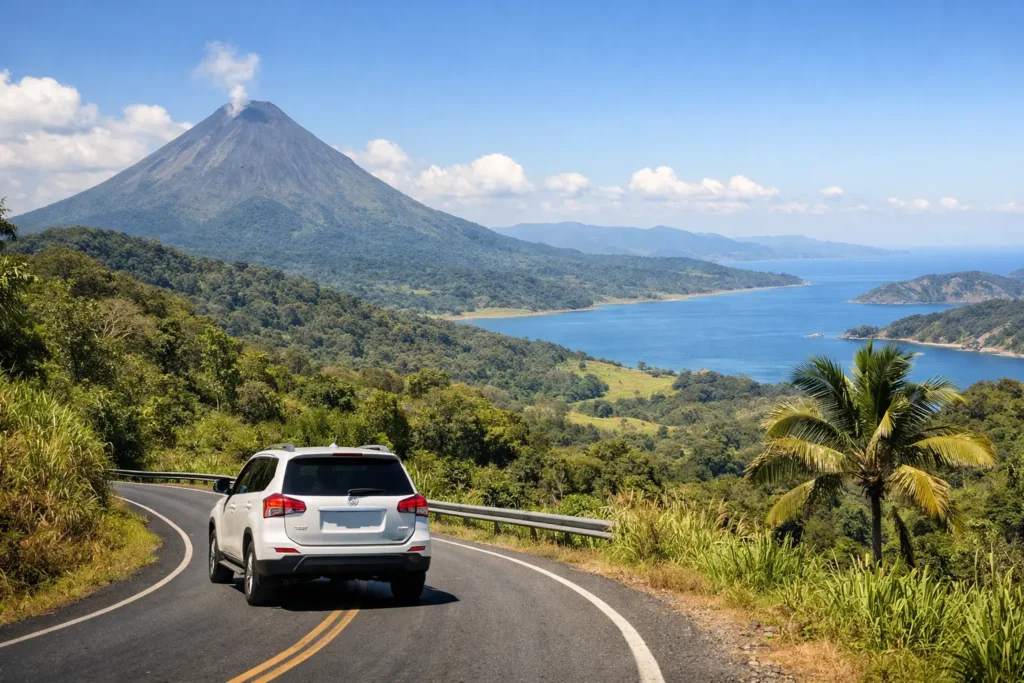
A Costa Rica transfer can be the part of the day you remember most – if you choose the right route and leave room for the views. The top scenic transfer routes connect the country’s volcanoes, cloud forests, beaches, and small towns in ways that a quick flight never can. With a private driver, you can travel comfortably, stop when the landscape calls for it, and arrive with a better feel for the country.
Road conditions, weather, traffic, and construction can affect every drive time listed below. Costa Rica’s beauty often comes with winding mountain roads, so a professional driver and an air-conditioned private vehicle make a real difference, especially for families, groups, and travelers arriving after a long flight.
7 Top Scenic Transfer Routes Worth Taking
1. San José Airport to La Fortuna and Arenal
For many visitors, the drive from Juan Santamaría International Airport to La Fortuna is their first real look at Costa Rica beyond the airport. The route climbs from the Central Valley through coffee-growing countryside and mountain communities before descending toward the lush northern plains. On a clear day near La Fortuna, the volcano can appear suddenly above the trees – an arrival that feels far more memorable than checking into a hotel after dark.
This transfer generally takes around three to four hours, depending on your exact hotel and traffic leaving San José. It is a smart route for a morning or early afternoon arrival, when there is enough daylight for a coffee stop, local lunch, or photo break. Travelers heading straight to hot springs, rainforest lodges, or Arenal adventures often appreciate having a driver who can point out what they are seeing along the way.
2. La Fortuna to Monteverde
The journey between Arenal and Monteverde is one of Costa Rica’s most dramatic changes of scenery. You leave the tropical, volcano-facing landscape around La Fortuna and travel along the shores of Lake Arenal before climbing toward the cool green mountains of Monteverde. Rolling pastures, distant ridgelines, wind-shaped trees, and lake views give this route a completely different character from the rainforest around Arenal.
Expect roughly three and a half to four and a half hours by road. Some travelers choose a lake crossing to shorten the land portion, but a private road transfer is often the better choice for guests who want door-to-door comfort, have young children, or prefer not to manage luggage across multiple vehicles and a boat. The roads can be curvy, so this is not the ideal day to rush. Build in time to enjoy the view and settle into Monteverde before evening.
3. Liberia Airport to La Fortuna
Travelers flying into Liberia often choose this route because it combines airport convenience with a beautiful introduction to Costa Rica’s northern landscapes. The drive begins in Guanacaste’s drier, sunnier terrain, where ranches and broad open views are common. As you travel east, the landscape becomes greener and more mountainous, building anticipation for the rainforest and hot springs around Arenal.
Plan on about three to four hours, depending on flight timing and your accommodation. It is especially appealing for visitors who want to begin with beach weather near Guanacaste and finish their vacation in La Fortuna, or the other way around. If your flight arrives late in the day, it may be better to stay near Liberia first rather than drive mountain roads after dark. A well-planned itinerary should feel relaxed, not like a race against sunset.
4. Monteverde to Manuel Antonio or Quepos
Few transfers show Costa Rica’s geographic variety as clearly as the descent from Monteverde to the Central Pacific. The cool cloud-forest region gives way to farmland, river valleys, and eventually warmer air as you approach Quepos and Manuel Antonio. By the time you arrive, the highland sweater has usually been replaced by beach clothes.
The trip commonly takes four to five hours. It is a longer transfer, but it is also a practical way to turn a travel day into part of the vacation. A private ride allows for a stop at a local restaurant, a viewpoint, or a stretch break when needed. This matters for families and groups, since the route’s changing elevations can feel long without room to pause. Arriving in Manuel Antonio before sunset is a worthwhile goal, particularly if your hotel overlooks the Pacific.
5. Manuel Antonio to Uvita
The drive south from Manuel Antonio to Uvita is relatively short, but it delivers some of the best coastal scenery in the country. Palms, hillsides, roadside fruit stands, and glimpses of the Pacific accompany you as the route follows the southern Pacific coast. It is an easy transition for travelers moving from Manuel Antonio’s lively beaches and national park to the quieter, more spacious feel of Uvita.
Most private transfers take about one and a half to two hours. Because the distance is manageable, this route works well for a late breakfast departure or a stop for lunch on the way. It is also a good option for travelers who want to split their Pacific Coast stay between two distinct experiences: wildlife and activity in Manuel Antonio, then beaches, waterfalls, and a slower pace in Uvita.
6. Uvita to Sierpe for Drake Bay and the Osa Peninsula
Getting closer to the Osa Peninsula is part of the adventure. From Uvita, the road south passes through rural communities, river country, and dense tropical greenery before reaching Sierpe, where many Drake Bay travelers continue by boat. The scenery becomes more remote as you head south, and that sense of distance is exactly what makes an Osa visit so special.
The drive to Sierpe is usually around two hours, followed by a boat transfer to Drake Bay. This is a route where good coordination matters as much as the drive itself. Boat schedules, luggage, weather, and hotel check-in times all need to line up. For travelers carrying camera gear, traveling with children, or organizing a larger party, having one team manage the road transfer and timing can remove a great deal of uncertainty from the day.
7. Jacó to San José Airport
The trip from Jacó to San José is often treated as a simple departure transfer, but it can be a scenic final chapter to a Costa Rica vacation. Leaving the coast, the route passes the Tarcoles River area and climbs back toward the Central Valley. Depending on timing, travelers may see coastal views, tropical forest, and the country’s changing terrain one last time before reaching the airport.
Allow about two to three hours, with extra time during busy travel periods or rainy-season afternoons. For an international flight, an early pickup is the comfortable choice. A private airport transfer means you do not have to return a rental car, navigate unfamiliar roads, or worry about fitting luggage into a shared shuttle. You can simply enjoy the ride, ask last-minute questions, and arrive with the time you need.
How to Choose Among Top Scenic Transfer Routes
The most beautiful route is not always the best route for every itinerary. A couple with flexible dates may prefer a longer mountain drive with scenic stops. A family arriving on a late flight may value the shortest safe route and a direct hotel arrival. Groups should also consider vehicle space, restroom breaks, luggage volume, and whether anyone gets motion sickness on winding roads.
Daylight is another major factor. Costa Rica is close to the equator, so sunset arrives early throughout the year, usually near 6 p.m. Mountain roads can be foggy or rainy later in the day, especially around Monteverde. Starting earlier gives you better views and more flexibility if weather or traffic changes the pace.
Private transportation is particularly valuable on routes with meaningful stops. A driver-guide can recommend where to pause for coffee, a clean restroom, a local meal, or a photo without turning the day into a rigid tour. At CR Transfer, that local knowledge is part of the service: the goal is not only to get you from one hotel to the next, but to help the road between them feel easy, safe, and worth your time.
Plan the Drive Like Part of the Vacation
When building your itinerary, avoid stacking a long transfer with a demanding activity on the same day. A five-hour drive followed by a night wildlife hike or a pre-dawn excursion can leave travelers tired rather than excited. Give each destination room to breathe, especially when moving between regions as different as Arenal, Monteverde, Manuel Antonio, and the Osa Peninsula.
Share your flight details, hotel names, group size, and any special needs before booking. That information helps determine the right pickup time, vehicle size, route, and possible stops. If you are traveling with a church group, multiple families, or travelers of different ages, coordinated logistics are often the difference between a stressful move day and a comfortable shared experience.
Costa Rica rewards travelers who look out the window. Choose a route that fits your pace, leave room for a few unplanned views, and let the journey add another story to the trip.